
Article Summary
Choosing a mystery box shouldn’t mean buying completely blind.
You may not know the exact products inside, but you can still evaluate:
- Product category
- Possible contents
- Product condition
- Value methodology
- Minimum vs. maximum outcomes
- Brand guarantees
- Compatibility and sizing
- Shipping costs
- Return and refund policies
- Seller transparency
The most useful question isn’t:
What’s the most expensive thing I could get?
It’s:
Would I still want this box if I received a normal outcome?
A good mystery box preserves the surprise without hiding the information you need to make a reasonable purchase.
A mystery box is supposed to contain:
Uncertainty.
That’s the point.
But there’s a difference between:
I don’t know exactly which product I’ll receive.
and:
I don’t understand what I’m buying at all.
Those are not the same experience.
You don’t need to know the exact contents before checkout.
But you should know enough to decide whether the unknown contents are likely to fit:
You.
Here’s how.
1. Start With the Product Category
Before looking at:
Jackpots.
Brands.
Retail values.
Start with the simplest question:
What kind of products are actually in this box?
Possible categories might include:
- Electronics
- Tech
- Gaming
- Beauty
- Clothing
- Fashion
- Accessories
- Watches
- Toys
- Collectibles
The narrower the category, the more predictable the experience.
Broad vs. Narrow Mystery Boxes
Imagine two boxes.
Box A
Possible contents:
Almost anything.
Box B
Possible contents:
Gaming accessories and merchandise.
Box A offers:
More uncertainty.
Box B offers:
More category control.
Neither is automatically better.
It depends on how much uncertainty you enjoy.
Choose a Category You Actually Like
This sounds obvious.
But it’s one of the most common mistakes.
Don’t buy:
Electronics
because the most expensive possible product looks attractive if you don’t actually want most electronics.
Don’t buy:
Beauty
if you rarely use beauty products.
Don’t buy:
Collectibles
if you don’t collect anything.
The category should make sense before the premium product enters the conversation.
2. Look at the Product Pool
The product category tells you:
The general area.
The product pool tells you:
What kinds of outcomes are possible.
A useful product page may show:
- Example products
- Product types
- Possible brands
- Value tiers
- Category boundaries
The exact SKU can remain unknown.
Ask Whether You Like the Normal Products
This is one of the strongest buying tests.
Suppose a tech mystery box shows:
Premium Possible Product
$600 smartwatch
But most examples are:
- Chargers
- Headphones
- Computer accessories
- Phone accessories
Ask:
Would I still want this box if I got one of those?
If yes:
Good.
If no:
You’re probably buying the premium possibility rather than the category.
3. Understand Product Condition
Mystery boxes can contain inventory from different sources.
Possible condition descriptions include:
- New
- Overstock
- Clearance
- Open-box
- Returns
- Pre-owned
These terms shouldn’t be treated as interchangeable.
New
Generally means the product hasn’t been previously used.
But packaging condition may still vary depending on inventory source.
Overstock
Usually describes:
Excess inventory.
It doesn’t automatically mean:
- Used
- Returned
- Damaged
For a deeper explanation, read Overstock Mystery Boxes: What They Are and What to Know Before Buying.
Open-Box
May indicate that:
- Packaging was opened
- Product was inspected
- Product was returned
- Product was displayed
Definitions vary by seller.
Look for the actual condition policy.
Customer Returns
A returned product has previously gone through a customer transaction.
Condition can vary significantly.
Don’t assume:
Return = broken.
But don’t assume:
Return = new
either.
Condition Matters Differently by Category
For:
Electronics
Functionality, accessories and battery condition may matter.
Beauty
Seals, product condition and expiration-related information can matter.
Fashion
Wear, sizing and packaging may matter.
Collectibles
Even outer packaging condition can affect desirability.
So don’t evaluate condition generically.
Evaluate it:
By category.
4. Understand How Value Is Calculated
A mystery box might advertise:
$200+ VALUE
But what does that mean?
Possible references include:
- MSRP
- Original retail price
- Current retail price
- Sale price
- Estimated market value
Those numbers can be very different.
MSRP Isn’t Always What People Pay
Imagine:
MSRP:
$150
Current retail:
$89
Sale price:
$69
Calling the product:
$150 VALUE
uses one real reference—
but doesn’t tell the whole pricing story.
That’s why value methodology matters.
Read Mystery Box Value Explained: MSRP, Retail Price and What Your Box Is Really Worth.
5. Look Beyond the Maximum Value
This may be the single biggest mistake mystery-box shoppers make.
A page says:
WIN UP TO $1,000 IN VALUE
Your brain focuses on:
$1,000.
But maximum value tells you:
The best possible outcome.
It doesn’t necessarily tell you:
The typical outcome.
Minimum Value
If disclosed, minimum value can tell you more about:
The downside boundary.
Average Value
Average can provide more context about the overall product pool.
But it can be distorted by a small number of very high-value outcomes.
Median Value
Median can sometimes help describe:
The middle outcome
more intuitively.
Imagine five boxes:
$30
$35
$40
$45
$500
Average:
$130
Median:
$40
Both calculations are correct.
But they tell very different stories.
The Maximum Is Not the Typical Box
Always remember:
Maximum ≠ Average ≠ Median ≠ Minimum
If only the maximum is shown, don’t mentally turn it into an expectation.
6. Separate Possible From Guaranteed
This distinction applies to:
- Brands
- Products
- Product count
- Value
- Categories
Suppose a page says:
Possible brands include A, B and C.
That doesn’t mean:
Every box contains A, B or C.
Possible means:
Possible.
Guaranteed means:
Promised.
Promotional Images Need the Same Treatment
A product appearing in an image may be:
- Example
- Possible content
- Guaranteed content
Those are three different things.
Read the accompanying text.
Don’t let the image make a promise the seller hasn’t actually made.
7. Check Compatibility, Size and Personal Fit
A product can have excellent financial value and still be useless to you.
Electronics Compatibility
Consider:
- Device
- Operating system
- Connector
- Region
- Product generation
A $100 accessory you can’t use doesn’t provide $100 of personal value.
Read Electronics Mystery Boxes.
Gaming Compatibility
Ask:
- PC?
- PlayStation?
- Xbox?
- Nintendo?
- Mobile?
A product for the wrong platform may have limited usefulness.
Read Gaming Mystery Boxes.
Clothing Size
Clothing introduces:
- Size
- Fit
- Cut
- Style
A premium jacket in the wrong size isn’t a premium outcome for you.
Read Clothing Mystery Boxes.
Beauty Compatibility
Beauty products introduce:
- Shade
- Skin type
- Product preferences
- Ingredients
Read Beauty Mystery Boxes.
Watches and Accessories
Consider:
- Wrist size
- Case size
- Style
- Ring size
- Belt size
- Material preference
Read Accessories Mystery Boxes and Watch Mystery Boxes
.
Collectibles
Collectors may care about:
- Franchise
- Character
- Authenticity
- Packaging
- Duplicates
Read Collectible Mystery Boxes.
8. Calculate the Real Checkout Price
A mystery box advertised at:
$29
doesn’t necessarily cost:
$29.
You may also encounter:
- Shipping
- Taxes where applicable
- Other disclosed charges
Always evaluate the final checkout total.
Shipping Matters More on Cheap Boxes
Imagine:
Box A
$15
+$12 shipping
Total:
$27
Box B
$22
+$5 shipping
Total:
$27
The first box looked cheaper.
At checkout:
It wasn’t.
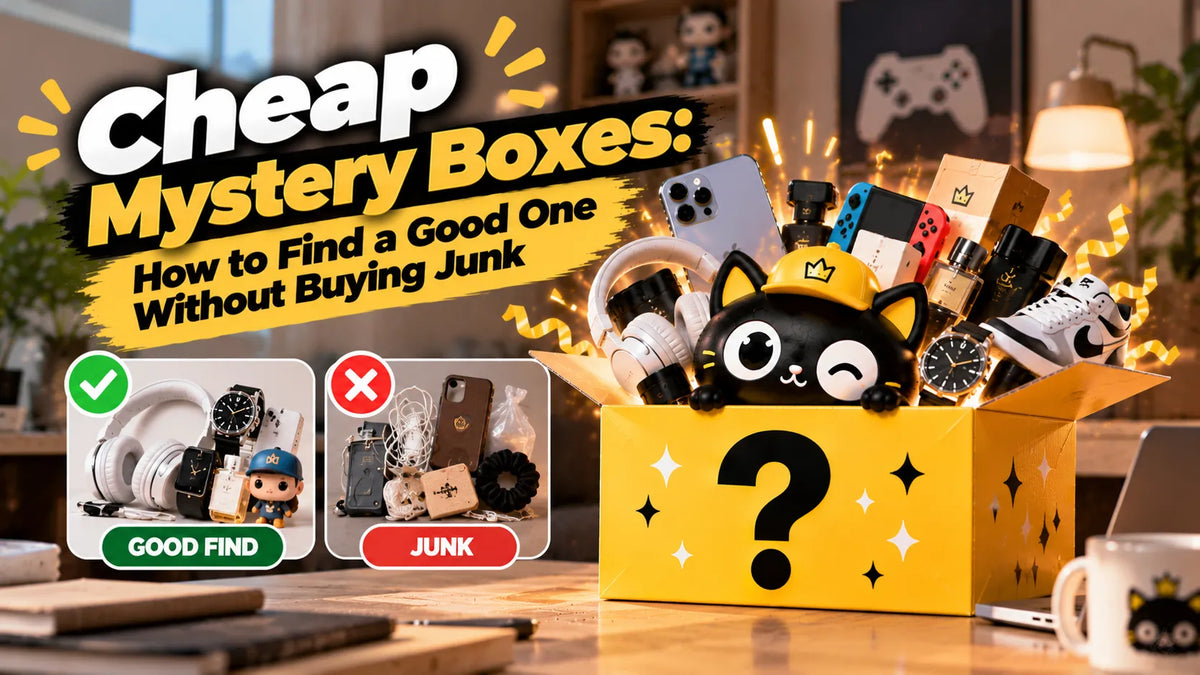
For budget shopping, read Cheap Mystery Boxes: How to Find a Good One Without Buying Junk.
9. Read the Return and Refund Policy
Mystery products create an important question:
Can I return something simply because I don’t like what I received?
Don’t assume.
Policies vary.
A seller may distinguish between:
- Change of mind
- Damaged product
- Incorrect product
- Missing product
- Defective product
Read the applicable policy before checkout.
Mystery Doesn’t Mean Every Outcome Is Returnable
The entire product concept involves:
Not choosing the exact item.
So:
I don’t like the product I received
and:
The product arrived damaged
may be treated differently.
Know the rules first.
10. Evaluate the Seller
Finally:
Who are you buying from?
Look for basic trust signals such as:
- Clear contact information
- Shipping policy
- Return/refund policy
- Product descriptions
- Condition information
- Secure checkout
- Realistic marketing
A mystery product doesn’t justify a mystery business.
Reviews Can Help—but Don’t Stop There
Customer reviews can provide useful context.
But don’t make them your only trust signal.
Also evaluate:
- Policies
- Product information
- Seller transparency
- Checkout experience
Read Are Mystery Box Websites Legit? 8 Things to Check Before You Buy.
The Most Important Test: Remove the Jackpot
Here’s the test we use repeatedly throughout our mystery-box guides.
Look at the product page.
Find:
The most expensive product.
Now mentally remove it.
Then ask:
Would I still buy this box?
If the Answer Is Yes
You probably like:
The actual product pool.
The jackpot becomes:
Extra excitement.
If the Answer Is No
You’re probably buying:
The chance of one exceptional outcome.
That’s a very different purchase decision.
Choose Based on Your Goal
Different shoppers should choose differently.
If You Want Discovery
Look for:
- Broad product pool
- Multiple categories you like
- Variety
A mixed mystery box may work well.
If You Want More Control
Choose:
- Narrow category
- Defined product types
- Clear condition
- Relevant brands
For example:
Gaming Mystery Box
instead of:
General Mystery Box.
If You’re Buying a Gift
Prioritize:
- Recipient’s interests
- Category relevance
- Presentation
- Delivery timing
Read Mystery Box Gifts: How to Choose the Right Surprise.
If You’re Buying Your First Mystery Box
Don’t assume you need to start with the most expensive tier.
A lower-cost box can help you learn:
Do I actually enjoy this format?
Before committing more money.
If You’re Buying for Value
Don’t focus exclusively on:
Highest possible MSRP.
Look at:
- Normal product pool
- Minimum value
- Current retail
- Personal usefulness
- Total cost
If You’re Buying for a Specific Product
Stop.
A mystery box may not be the right format.
If you already know:
I want this exact watch.
or:
I want these exact headphones.
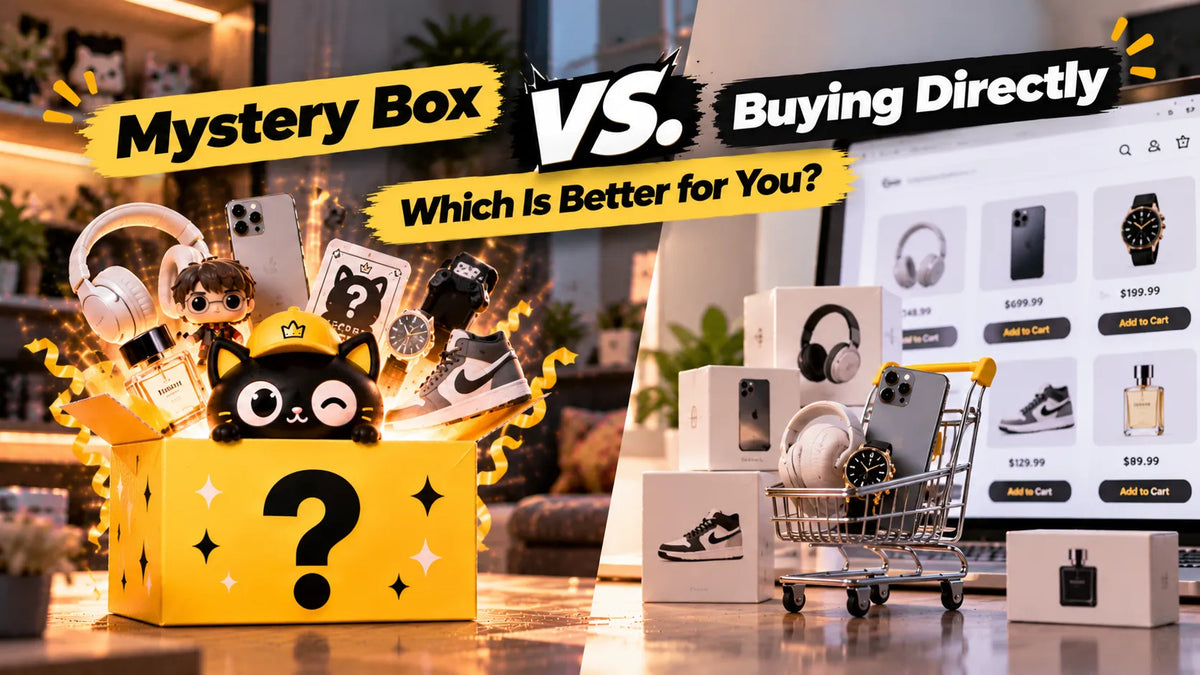
buying the product directly is usually more predictable.
Mystery Boxes Work Best Between Two Extremes
Too much certainty:
I know exactly what’s inside.
Then it isn’t much of a mystery.
Too little information:
I have no idea what I’m buying.
Then the purchase becomes difficult to evaluate.
The useful middle ground is:
I understand the boundaries. I don’t know the exact outcome.
That’s controlled uncertainty.
A Simple Mystery Box Scorecard
Before buying, score each area from:
0 to 2.
Category Fit
0 — I don’t really care about the category.
1 — Some products interest me.
2 — I like most products in this category.
Product Pool
0 — Almost no information.
1 — Some examples.
2 — Clear boundaries and realistic examples.
Condition
0 — Unclear.
1 — Partially explained.
2 — Clearly described.
Value
0 — Only huge maximum claims.
1 — Some value context.
2 — Clear methodology and useful context.
Compatibility
0 — High risk.
1 — Some uncertainty.
2 — Most possible products work for me.
Seller Transparency
0 — Important information missing.
1 — Basic information available.
2 — Clear policies and product information.
Your Score
10–12
The box appears relatively easy to evaluate.
7–9
Review the weak areas before buying.
0–6
You may not have enough information—or enough category fit—to make the mystery worthwhile.
This isn’t a scientific rating system.
It’s a practical decision tool.
Category-by-Category Quick Guide
Electronics
Prioritize:
Compatibility + condition.
Tech
Prioritize:
Usefulness + compatibility.
Gaming
Prioritize:
Platform + product type.
Beauty
Prioritize:
Condition + product fit.
Clothing
Prioritize:
Size + style.
Fashion
Prioritize:
Style + sizing + value.
Accessories
Prioritize:
Style + usability.
Watches
Prioritize:
Style + size + value.
Toys
Prioritize:
Age + interests.
Collectibles
Prioritize:
Authenticity + condition + duplicates.
10 Questions to Ask Before Checkout
Use this as your final checklist.
1. What category am I buying?
☐ Clear
2. What kinds of products can appear?
☐ Clear
3. What condition can they be in?
☐ Clear
4. How is value calculated?
☐ Clear
5. Am I confusing maximum value with typical value?
☐ No
6. Are shown brands guaranteed?
☐ I understand the difference
7. Could compatibility or sizing make products unusable?
☐ Checked
8. What is my final checkout price?
☐ Checked
9. What happens if something arrives damaged?
☐ Policy checked
10. Would I still buy without the jackpot product?
☐ Yes
If that last answer is:
No
go back and reconsider the purchase.
How BoxieJoy Thinks About Choosing a Mystery Box
Mystery boxes shouldn’t require shoppers to know:
Nothing.
They should require shoppers to know:
Enough.
Enough to understand:
Category.
Condition.
Value.
Possible contents.
Relevant compatibility.
Price.
Then one important question remains unanswered:
What exactly am I going to get?
That’s the fun part.
Because good mystery-box shopping isn’t:
Blind purchasing.
It’s:
Informed uncertainty.
Continue Your Research
I’m ready to buy
Read How to Buy a Mystery Box Online.
I want to compare the best options
Read Best Mystery Boxes to Buy in 2026.
I want to understand how mystery boxes work
Read How Do Mystery Boxes Work?.
I want to understand value
Read Mystery Box Value Explained.
I want a cheaper box
Read Cheap Mystery Boxes.
My budget is under $100
Read Mystery Boxes Under $100.
I want to understand overstock
Read Overstock Mystery Boxes.
I’m buying a gift
Read Mystery Box Gifts.
I want to check the seller
Read Are Mystery Box Websites Legit?.
I’m still deciding whether to buy one
Read Are Mystery Boxes Worth It?.
Frequently Asked Questions
How do I choose a good mystery box?
Start with a product category you genuinely like, then evaluate possible contents, condition, value methodology, compatibility, shipping, returns and seller transparency.
What should I look for in a mystery box?
Look for clear information about the product pool, condition, possible brands, value, shipping and policies while allowing the exact products to remain unknown.
How can I tell if a mystery box is worth buying?
Ask whether you’d be satisfied with several normal outcomes—not only the highest-value product shown.
Should I choose a mystery box based on maximum value?
No. Maximum value only describes the upper end of possible outcomes. It doesn’t necessarily describe a typical box.
Is MSRP a good way to compare mystery box value?
MSRP can provide context, but current retail or sale prices may differ significantly. Understand which pricing reference the seller uses.
Are brands shown on mystery box pages guaranteed?
Only when explicitly stated. Possible brands and guaranteed brands should be treated differently.
Should beginners buy cheap mystery boxes first?
A lower-priced box can be a reasonable way to find out whether you enjoy the mystery-box format before spending more.
Should I buy a mystery box if I want one specific product?
Usually not. If you already know the exact product you want, buying it directly provides much more certainty.
What is the biggest red flag when choosing a mystery box?
One major warning sign is an offer that relies heavily on an expensive possible product while providing very little information about normal outcomes.
What’s the best mystery box to buy?
There’s no universal best box. The best option depends on your interests, budget, tolerance for uncertainty and whether several possible products would be useful to you.
Final Takeaway
If you remember only one thing from this guide, make it this:
Choose the normal outcome—not the jackpot.
Before buying a mystery box, understand:
What category you’re buying.
What products may appear.
What condition they’re in.
How value is calculated.
What isn’t guaranteed.
What the final price is.
Then ask:
Would I still be happy if I didn’t receive the best product shown?
If yes:
The mystery is probably adding to the experience.
If no:
The mystery may be doing too much of the selling.
A good mystery box keeps the product unknown.
It doesn’t keep the purchase itself impossible to understand.
Article Information
Published by: BoxieJoy Editorial Team
Topic: Mystery Box Buying Guides
Last reviewed: October 2026
BoxieJoy editorial content is intended for general shopping and product-comparison purposes. Product pools, condition, brands, values, compatibility, prices, shipping, inventory and seller policies vary. Examples and scoring frameworks in this article are illustrative and don’t represent guaranteed BoxieJoy contents, values or outcomes unless explicitly stated on an applicable product page.